THE NOODLES
Thick and thin feel different
Noodle size affects how broth and strands meet in each spoonful.
TAIWAN, ONE DISH AT A TIME
A simple bowl, a noodle stall’s daily rhythm.
Rice noodle soup often makes sense as a meal together with the little plate beside it. Sip the broth, eat some noodles, then try tofu, meat, or another sliced side. Markets, neighborhood stalls, and small eateries turn this simple bowl-and-plate arrangement into a meal with several textures, without an elaborate menu.
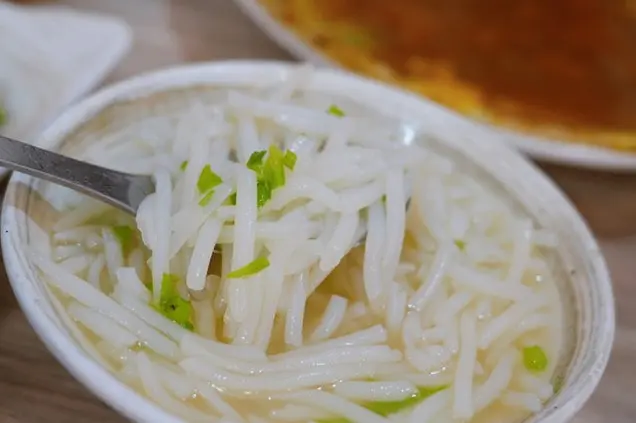
Taiwanese mi fen tang often uses relatively thick, short, soft rice noodles, though thinner versions also appear. Broth may carry the aromas of bones, fried shallots, celery, or other ingredients. A pale color does not mean an unseasoned soup. Start with the noodles and broth, then choose one side rather than feeling you must sample the whole counter.
10 places to explore • DISHES & PLACES
 Dish photo unavailable
THE NOODLES
Noodle size affects how broth and strands meet in each spoonful.
THE BROTH
Stock, shallots, celery, and seasoning vary between shops.
THE SIDES
A small selection can give the meal plenty of variety.
THE GUIDE MEETS THE TABLE
Choose an MRT area or station, then open a shop page for the actual dish and directions.
Station codes and line colors match the selected MRT area.
10 shops in this selection
Dish photo unavailable
G02Xindian District Office · 新店區公所Taipei / New Taipei / Songshan-Xindian Line
米粉湯
七張米粉湯
Qi Zhang Rice Noodle Soup
The broth is light and naturally sweet. The noodles retain an old-fashioned springy, slightly snappy bite without turning mushy.
See this dish at the shop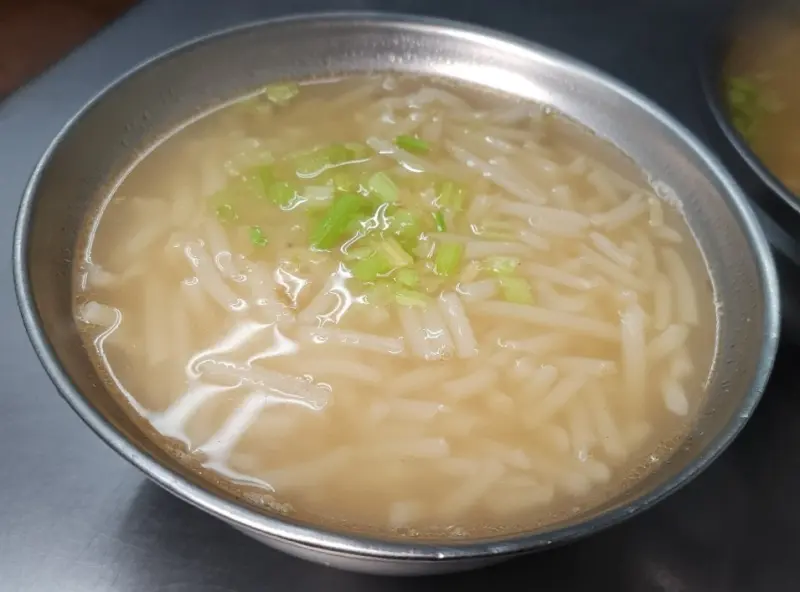 Dish photo unavailable
G02Xindian District Office · 新店區公所Taipei / New Taipei / Songshan-Xindian Line
米粉湯
崇光米粉湯(帥哥米粉湯)
Chong Guang Mi Fen Tang
The light, easy-drinking broth releases celery and pepper aromas with the steam, while rice noodles absorb the soup. A sip between bites of assorted cuts works naturally.
See this dish at the shop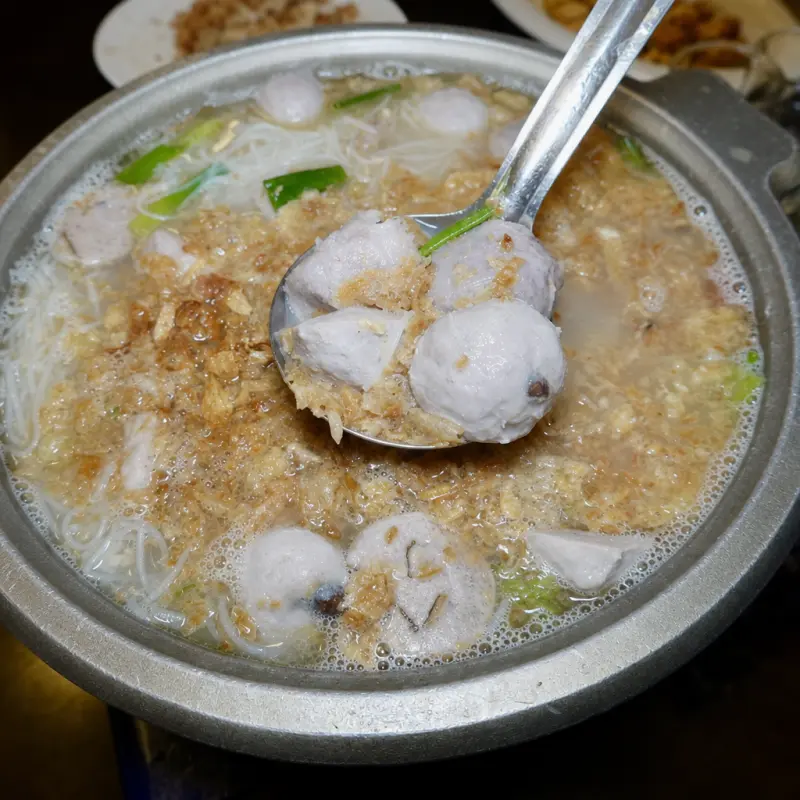 Dish photo unavailable
G19Songshan · 松山Taipei / New Taipei / Songshan-Xindian Line
芋頭米粉湯
磚窯古早料理南港創始店
Zhuan Yao Traditional Cuisine Nangang Original Store
Soft taro, pork balls, and abundant rice noodles fill a clay pot, with crisp egg adding aroma. The light broth is not heavy and suits a whole table.
See this dish at the shop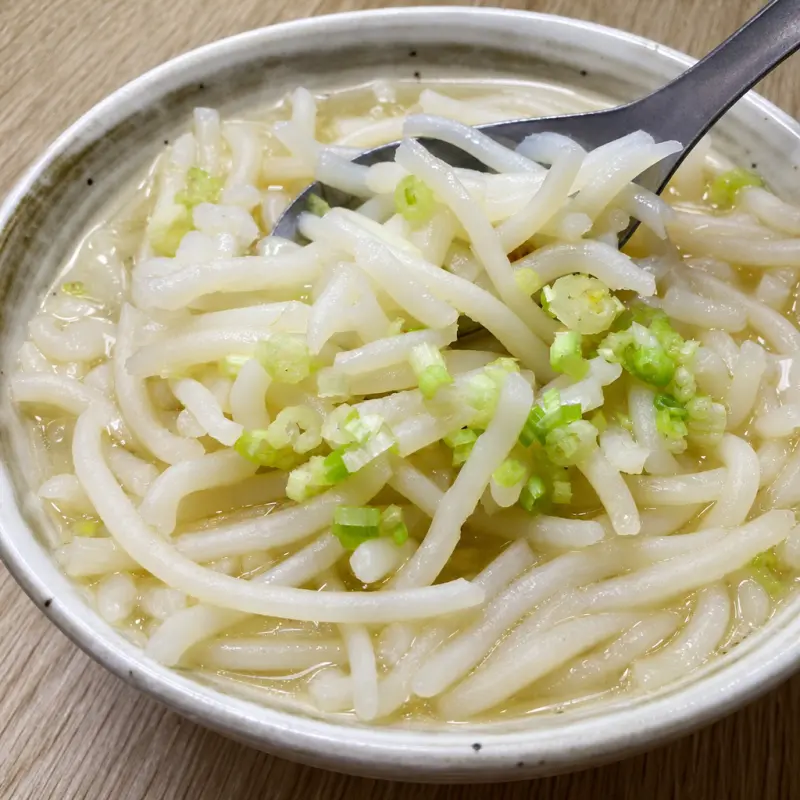 Dish photo unavailable
O03Yongan Market · 永安市場Taipei / New Taipei / Zhonghe-Xinlu Line
米粉湯
中和米粉湯
Zhonghe Rice Noodle Soup
Thick rice noodles absorb the sweet, savory broth but stay springy; chopped celery adds fragrance. Taste plain before adding white pepper.
See this dish at the shop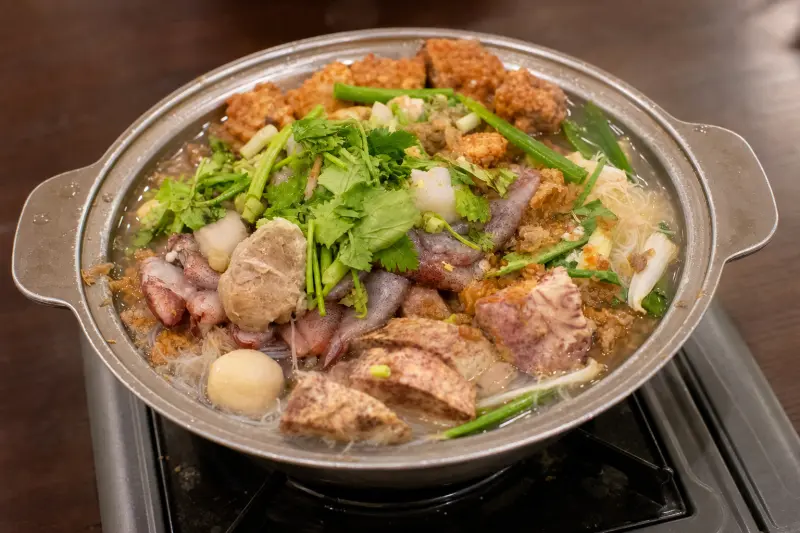 Dish photo unavailable
R12Shuanglian · 雙連Taipei / New Taipei / Tamsui-Xinyi Line
狗母魚酥米粉湯
丸滿台灣味手路菜
Wan Man Taiwanese Cuisine
Lizardfish crisps and rice noodles absorb seafood broth alongside taro, squid, and meatballs, giving more layers than a simple rice-noodle soup.
See this dish at the shop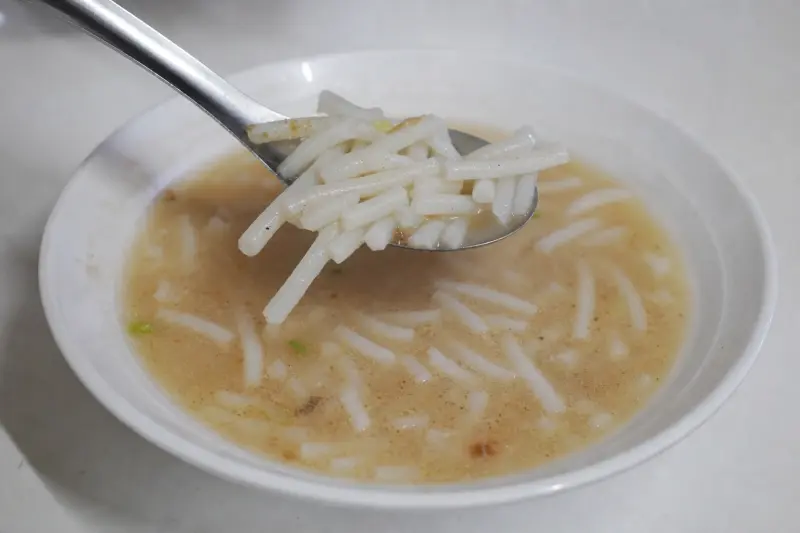 Dish photo unavailable
A9Linkou · 林口Taipei / New Taipei / Taoyuan Airport MRT
米粉湯
半邊圓米粉湯香菇肉粥
Ban Bian Yuan Rice Noodle Soup and Mushroom Pork Congee
Short noodles absorb natural pork-bone and radish sweetness in a light broth with gentle fried-shallot aroma, a mild base for sliced sides.
See this dish at the shopMenus and availability may change. Check with the shop before visiting.
A FEW WORDS GO A LONG WAY
Start with the menu and portion size. The Chinese phrases below can help you ask; choices and adjustments depend on the shop.
是粗米粉還是細米粉?有大小碗嗎?
Are the rice noodles thick or thin? Do you have different bowl sizes?
這些小菜是什麼?一份多大?
What are these side dishes? How large is a portion?
芹菜或油蔥可以不加嗎?
Could I have it without celery or fried shallots? Some seasoning may already be in the broth.
FIND YOUR FLAVOR
Compare the preparation, texture, and serving style to decide what you would enjoy.
Mi fen tang and mian xian
Rice noodles differ from fine wheat noodles in ingredients and texture. The broth may also be clearer in one dish and thickened in another, depending on the version.
Noodle ingredients and the actual soup.
Rice noodle soup and stir-fried rice noodles
One emphasizes broth and slippery noodles; the other combines stir-fried seasoning and ingredients with the strands.
Soup-led or stir-fried flavors.
GO A LITTLE DEEPER
Ordering soup and sides separately gives diners flexibility. People at the same table can share a plate while each has a bowl of noodles. This arrangement is part of the everyday noodle-stall experience, not a sign that the soup itself lacks interest.
Thicker rice noodles can feel short, tender, and slippery; thinner ones gather into a different mouthful. Recipes and cooking methods vary. They do not need to imitate the springiness of wheat ramen. Try a small amount and notice how the noodles carry the broth.
Shallots, celery, pepper, and stock bring different aromas. Sip it as served before adding chili or sauce. If you avoid a topping, ask before the bowl arrives, since some flavors may already have been cooked into the soup.
The sliced-side counter may include tofu products, meat, and various organ meats. If a name is unfamiliar, ask which part it is, how it is served, and what it costs. Tofu or a familiar meat is a comfortable starting point; offal is optional.
No. Thickness and noodle products vary. Look at the bowl or ask the shop before ordering.
Color alone cannot tell you. Ingredients and cooking methods both affect appearance; ask directly if you need to know.
No. Choose tofu, a familiar meat, or another available side, or simply enjoy the soup on its own.
KEEP EXPLORING
Compare another Taiwan flavor, or return to the MRT food finder.